
Is Microsoft Dynamics 365 Business Central the Missing Piece Your Growing Business Needs?
In this article, you’ll learn what makes Business Central one of the leading ERP platforms, its key features, benefits, implementation process, real-world applications, and why businesses across India

Businesses today face increasing pressure to streamline operations, improve customer experiences, and make faster decisions. As companies grow, managing finance, inventory, sales, supply chains, and operations through disconnected systems becomes a challenge. This is where Microsoft Dynamics 365 Business Central emerges as a powerful solution.
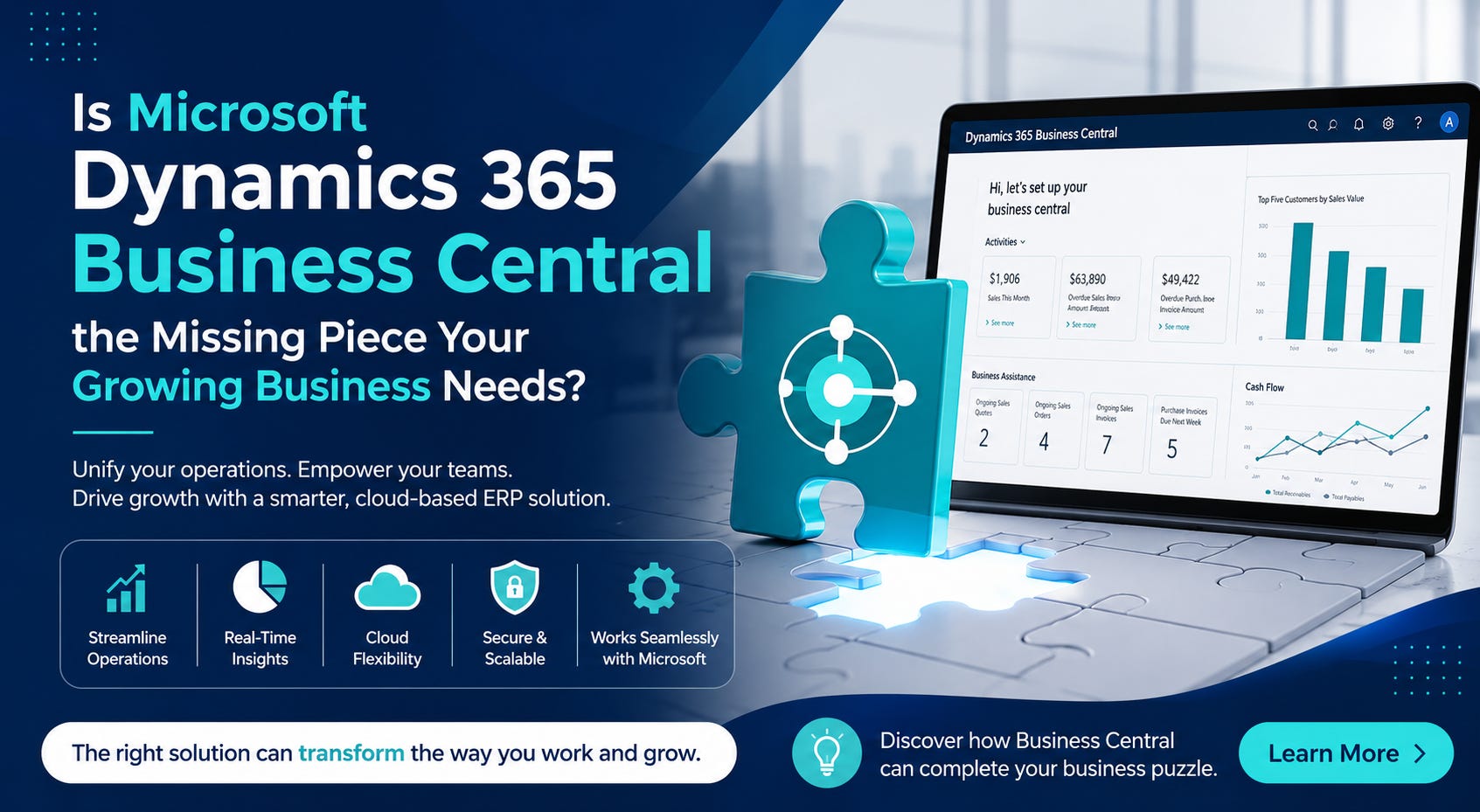
Whether you are a manufacturer, distributor, retailer, or service provider, choosing the right ERP platform can significantly impact your business performance. But is Microsoft Dynamics 365 Business Central truly worth the investment?
In this article, you’ll learn what makes Business Central one of the leading ERP platforms, its key features, benefits, implementation process, real-world applications, and why businesses across India are increasingly adopting it.
What is Microsoft Dynamics 365 Business Central?
Microsoft Dynamics 365 Business Central is a cloud-based Enterprise Resource Planning (ERP) solution designed for small and medium-sized businesses. It helps organizations manage finances, operations, sales, purchasing, inventory, manufacturing, and customer service from a single platform.
Previously known as Microsoft Dynamics NAV, Business Central combines modern cloud capabilities with Microsoft’s powerful ecosystem, including Azure Cloud, Microsoft 365, and the Power Platform.
As one of the most advanced Microsoft ERP solutions, it enables businesses to improve efficiency, automate processes, and gain real-time visibility into operations.
Why Businesses Are Choosing Dynamics 365 Business Central
The ERP market has evolved significantly over the last decade. Businesses no longer want complex systems that require extensive maintenance and expensive infrastructure.
Business Central addresses these challenges by offering:
Cloud-Based Flexibility
Hosted on Microsoft Azure Cloud, Business Central allows users to access business data securely from anywhere. This flexibility supports remote work, multi-location operations, and business continuity.
Unified Business Management
Instead of using separate tools for accounting, inventory, sales, and procurement, organizations can manage everything within one platform.
Scalability for Growth
As businesses expand, Business Central grows with them. New users, modules, and functionalities can be added without major disruptions.
AI-Driven Insights
With Microsoft’s growing focus on Enterprise AI solutions, Business Central helps organizations identify trends, predict outcomes, and make smarter decisions.
Key Features of Microsoft Dynamics 365 Business Central
Financial Management
Business Central simplifies financial operations through:
General ledger management
Accounts payable and receivable
Budgeting and forecasting
Fixed asset management
Financial reporting
Real-time financial visibility helps businesses maintain accuracy and compliance.
Inventory Management
For companies looking for advanced inventory management software India, Business Central offers robust inventory control features.
Capabilities include:
Real-time stock tracking
Inventory forecasting
Warehouse management
Lot and serial number tracking
Automated replenishment
Businesses can reduce stock shortages and improve inventory turnover.
Supply Chain Management
Business Central streamlines procurement and vendor management through automated purchasing processes and supplier performance tracking.
Organizations gain better control over their supply chain while reducing operational inefficiencies.
Sales and Customer Management
The platform enables sales teams to:
Manage customer interactions
Generate quotes and invoices
Track opportunities
Monitor sales performance
This creates a seamless experience for both employees and customers.
Manufacturing Management
Manufacturers require specialized ERP capabilities to manage production effectively.
As a leading manufacturing ERP software India, Business Central supports:
Production planning
Bill of materials management
Capacity planning
Shop floor control
Demand forecasting
Manufacturers can improve productivity while reducing waste and production delays.
Project Management
Businesses handling multiple projects can track costs, resources, timelines and profitability from a centralized dashboard.
The Role of Azure Cloud and Power Platform
One of the biggest advantages of Dynamics Business Central is its integration with Microsoft’s technology ecosystem.
Azure Cloud Integration
Azure provides:
Enterprise-grade security
Automatic backups
High availability
Global scalability
Disaster recovery capabilities
This reduces IT management overhead while ensuring business continuity.
Power Platform Integration
The Microsoft Power Platform includes:
Power BI
Power Apps
Power Automate
Copilot capabilities
Together, these tools help organizations create workflows, generate analytics and automate repetitive processes without extensive coding.
How Business Central Supports Different Industries
Manufacturing
Manufacturers can optimize production planning, inventory control, and quality management.
Distribution
Distributors gain visibility into inventory levels, logistics, procurement, and customer orders.
Retail
Retail businesses can manage sales, stock levels, purchasing, and financial operations efficiently.
Logistics and Supply Chain
For companies seeking ERP software for logistics industry, Business Central provides route planning support, warehouse management, inventory visibility, and shipment tracking capabilities.
Professional Services
Service-based businesses can improve project tracking, resource allocation, and profitability analysis.
ERP Implementation: What Businesses Should Know
Successful ERP adoption requires a structured approach.
Step 1: Business Assessment
Organizations should identify operational challenges and define implementation goals.
Step 2: Solution Design
The ERP system is configured based on business processes and industry requirements.
Step 3: Data Migration
Historical business data is transferred from legacy systems into Business Central.
Step 4: Testing and Training
Users receive training while workflows are tested to ensure system readiness.
Step 5: Go-Live and Support
The ERP platform is launched with ongoing support and optimization.
A well-planned ERP implementation can significantly reduce risks and accelerate return on investment.
Why Choosing the Right Dynamics 365 Business Central Partner Matters
Technology alone does not guarantee ERP success.
Experienced Dynamics 365 Business Central partners help organizations:
Assess business requirements
Configure solutions correctly
Manage data migration
Provide user training
Offer post-implementation support
Working with knowledgeable implementation specialists helps businesses maximize their ERP investment.
Similarly, organizations transitioning from legacy Microsoft systems often benefit from working with a trusted Microsoft Navision partner to ensure a smooth migration process.
Real-World Example: Manufacturing Company Transformation
Consider a mid-sized manufacturing company struggling with disconnected software systems.
Challenges included:
Manual inventory tracking
Production delays
Limited financial visibility
Inaccurate forecasting
After implementing Microsoft Dynamics 365 Business Central:
Inventory accuracy improved significantly
Production planning became more efficient
Financial reporting became real-time
Order fulfillment times decreased
The company achieved better operational control and improved profitability.
Benefits of Microsoft Dynamics 365 Business Central
Improved Productivity
Automation reduces manual tasks and allows employees to focus on strategic work.
Better Decision-Making
Real-time dashboards and analytics provide valuable business insights.
Lower Operating Costs
Streamlined workflows help eliminate inefficiencies and reduce administrative expenses.
Enhanced Customer Experience
Faster order processing and improved service contribute to higher customer satisfaction.
Strong Security
Microsoft’s cloud infrastructure provides enterprise-level security and compliance standards.
Potential Challenges to Consider
No ERP solution is perfect. Businesses should also consider:
Initial Learning Curve
Employees may require training to become comfortable with new processes.
Change Management Requirements
Successful adoption depends on user acceptance and organizational readiness.
Implementation Costs
Although cloud ERP reduces infrastructure expenses, implementation requires investment in planning and deployment.
When managed correctly, these challenges are usually outweighed by the long-term benefits.
Frequently Asked Questions
Is Microsoft Dynamics 365 Business Central suitable for small businesses?
Yes. Business Central is designed for small and medium-sized businesses while also supporting larger organizations with complex requirements.
Can Business Central support manufacturing operations?
Absolutely. It offers advanced production planning, inventory control, and supply chain management capabilities.
Is Business Central cloud-based?
Yes. It is primarily delivered through Microsoft Azure Cloud, offering flexibility, scalability, and security.
How long does ERP implementation take?
Implementation timelines vary depending on business complexity, data migration requirements, and customization needs. Projects typically range from a few weeks to several months.
Can Business Central integrate with Microsoft 365?
Yes. It integrates seamlessly with Outlook, Excel, Teams, Power BI, and other Microsoft applications.
Conclusion
The business landscape is becoming increasingly competitive, making digital transformation more important than ever. Microsoft Dynamics 365 Business Central offers a powerful combination of ERP functionality, cloud flexibility, AI-driven insights, and seamless Microsoft integration.
From financial management and inventory control to manufacturing operations and logistics management, Business Central provides organizations with the tools needed to improve efficiency and support long-term growth.
For businesses looking to modernize operations, streamline processes, and gain greater visibility across departments, Microsoft Dynamics 365 Business Central represents a future-ready ERP solution capable of delivering measurable business value.
Looking to explore whether Business Central is the right fit for your organization? Connect with Rivira Systems to discuss your business requirements and discover how the right ERP strategy can help accelerate your growth journey. Share this article with your team and let us know your biggest ERP challenge.